
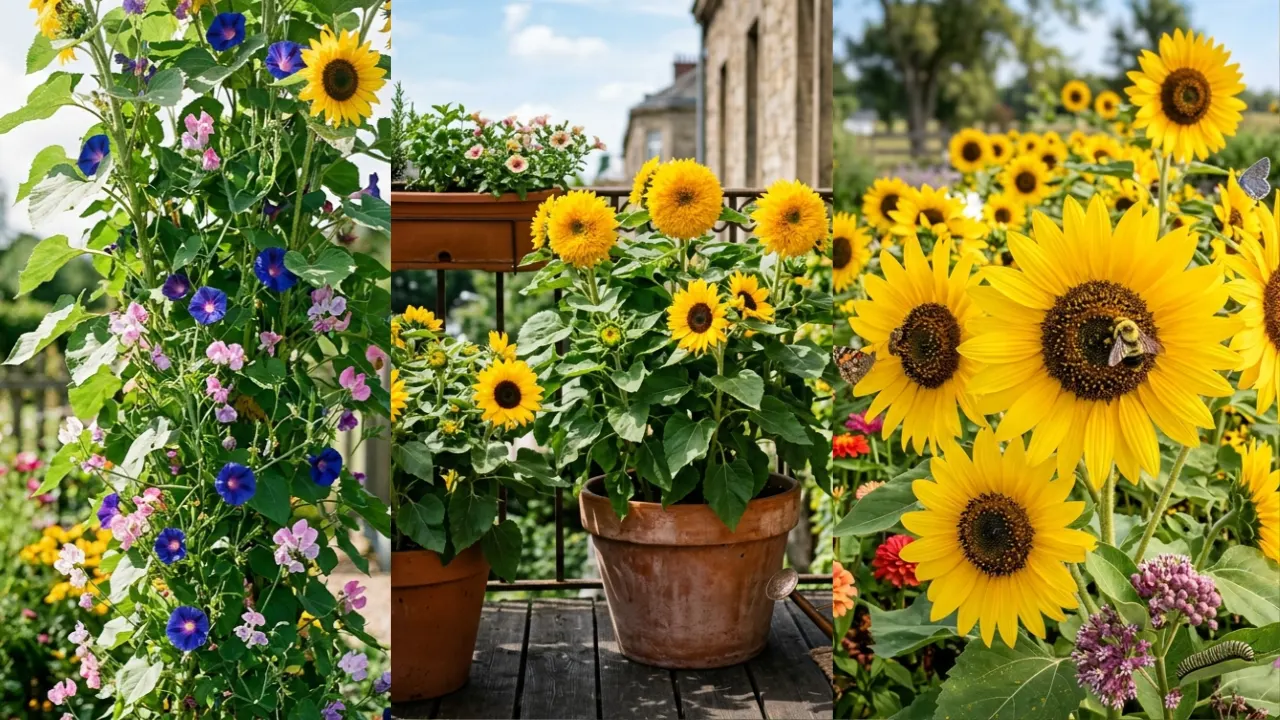
There is something irresistibly joyful about sunflowers. Their towering stalks, enormous golden heads, and unwavering tendency to face the sun make them one of the most beloved flowers in the gardening world. Beyond their obvious beauty, sunflowers are incredibly versatile. They can serve as natural fences, children’s gardening projects, pollinator magnets, and even sources of food. Whether you have acres of open land or a small urban balcony, there is a sunflower gardening idea that will work for your space. In this article, we explore ten creative ways to incorporate sunflowers into your garden, each offering its own unique charm and practical benefits.
Create a Living Sunflower Wall or Privacy Screen
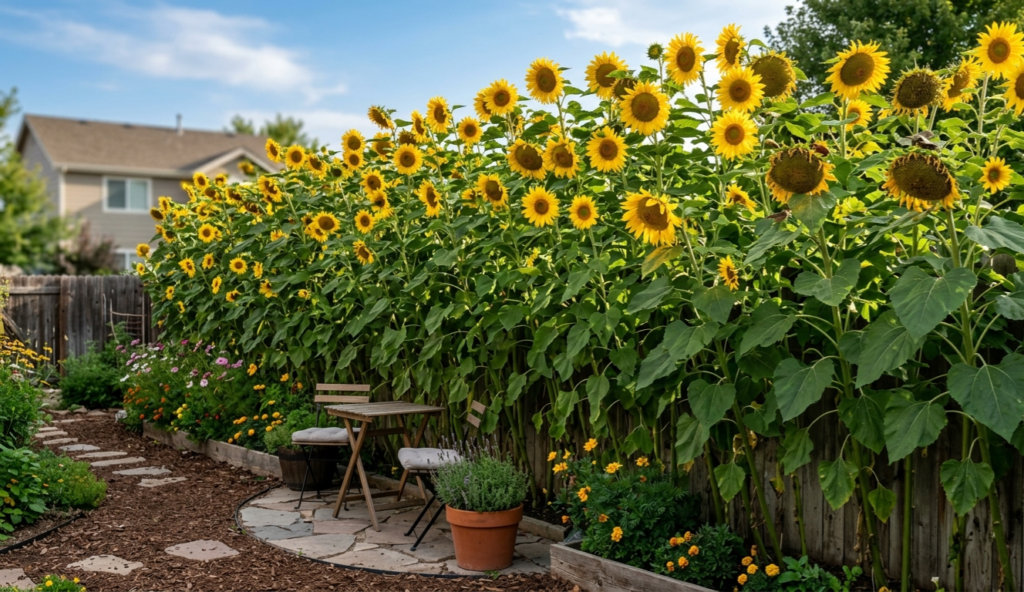
One of the most dramatic uses of sunflowers is to plant them as a living wall. Tall varieties such as Russian Mammoth or American Giant can reach heights of ten to twelve feet or more, creating a dense, flowering barrier that provides privacy from neighbors or screens unsightly views. Plant them in a straight row about twelve to eighteen inches apart, and within a few months, you will have a natural fence that is both functional and breathtakingly beautiful. As the flowers mature, the heavy seed heads will attract birds, adding another layer of life to your living wall. This approach works especially well along property lines, around vegetable gardens, or to define outdoor living spaces.
Design a Sunflower Maze for Family Fun
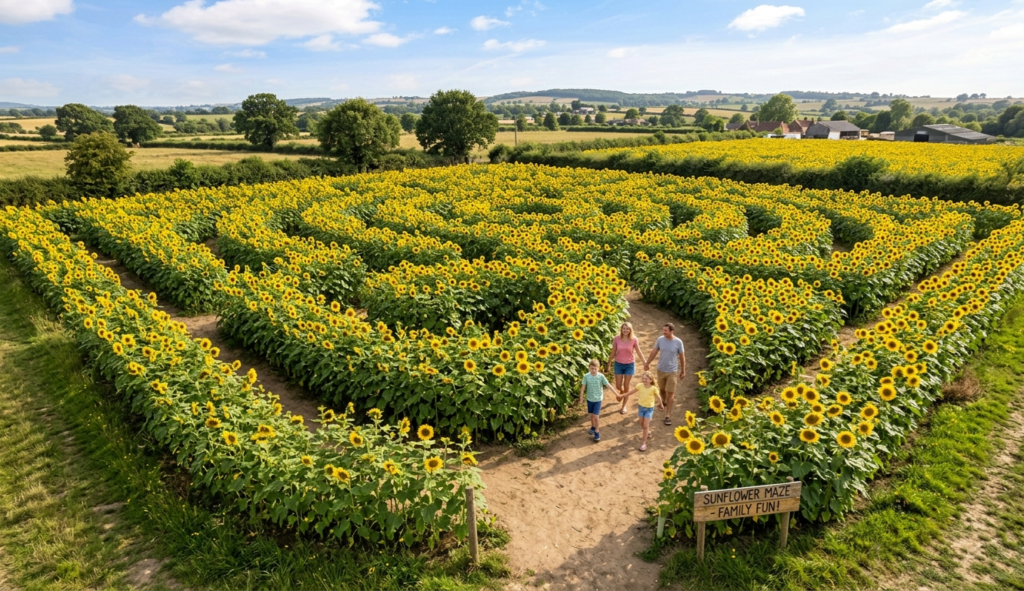
For those with ample space, creating a sunflower maze is a magical project that delights children and adults alike. Plan a winding path through a planted area of tall sunflowers, leaving enough space between rows for easy walking. As the sunflowers grow, the maze takes shape, offering a seasonal attraction that changes throughout the summer. This idea requires planning ahead—map out your pathways before planting and choose varieties that grow uniformly tall. The experience of wandering through a sunflower maze, surrounded by towering blooms and buzzing bees, is unforgettable. It also makes for spectacular family photos and a wonderful way to connect children with gardening.
Plant a Sunflower Circle for Outdoor Gatherings
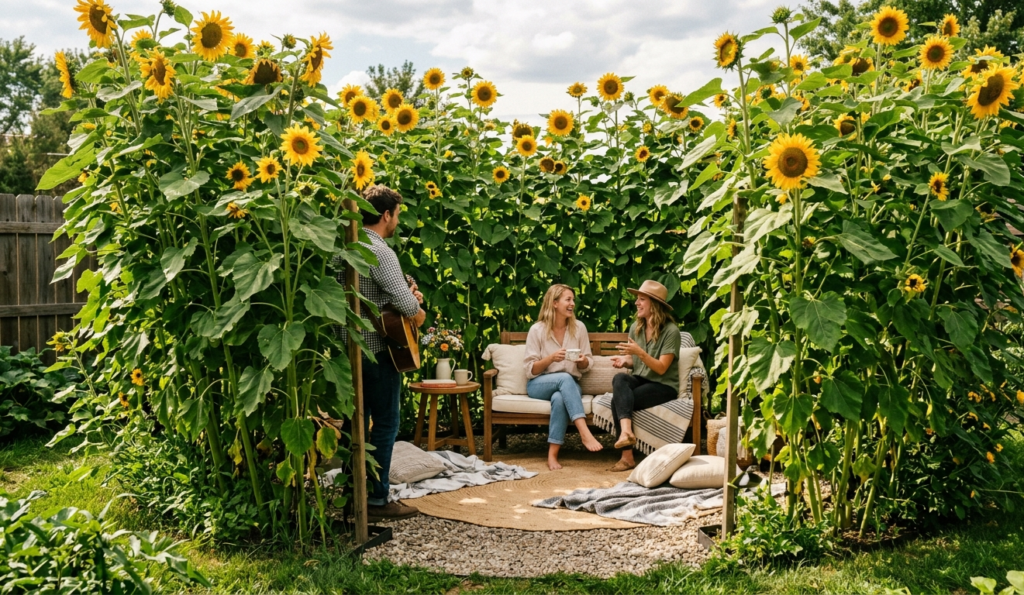
Imagine sitting inside a circle of towering sunflowers, sheltered from wind and surrounded by golden blooms. Planting sunflowers in a circle creates an outdoor room that feels both intimate and magical. Choose a diameter of ten to fifteen feet and plant tall sunflower varieties around the perimeter, leaving a narrow entrance. Inside the circle, you can place a bench, a small table, or simply spread a blanket for reading or picnicking. As the sunflowers mature, they form a living enclosure that offers shade, beauty, and a sense of seclusion. This idea is particularly charming for backyard weddings, children’s play spaces, or quiet meditation spots.
Grow Sunflowers in Containers for Small Spaces
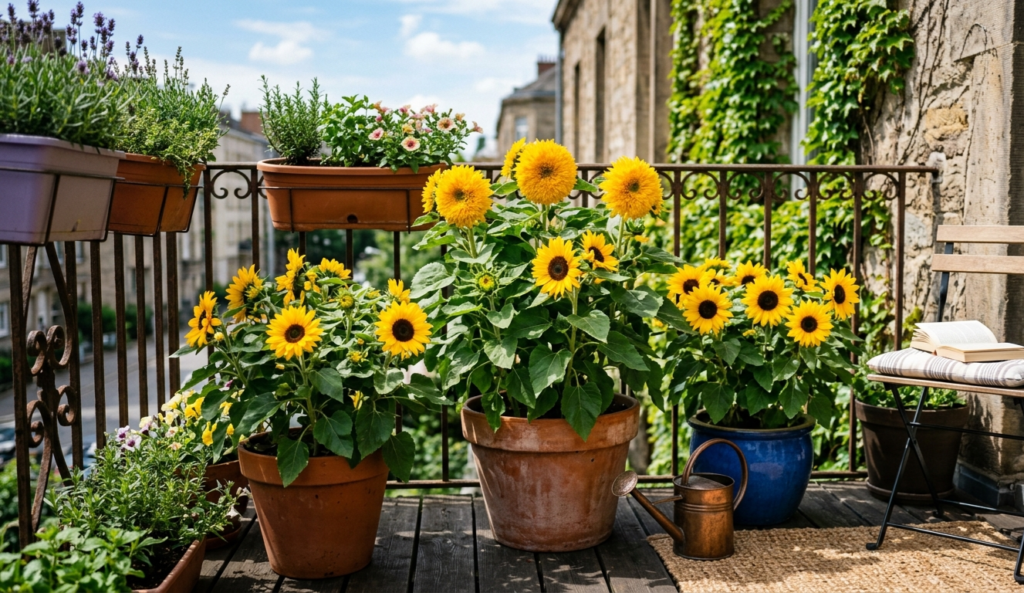
You do not need a large garden to enjoy sunflowers. Many dwarf and medium-sized varieties thrive in containers, making them perfect for patios, balconies, and small courtyards. Varieties such as Sunspot, Teddy Bear, or Elf grow to heights of one to three feet and produce abundant blooms in compact spaces. Choose a container that is at least twelve inches deep with good drainage, fill it with quality potting soil, and place it in a location that receives full sun. Container-grown sunflowers can be arranged in groups for impact, lined along a balcony railing, or used as cheerful accents around outdoor seating areas. They also have the advantage of being portable, allowing you to move them to follow the sun or protect them from harsh weather.
Create a Sunflower Teepee for Children
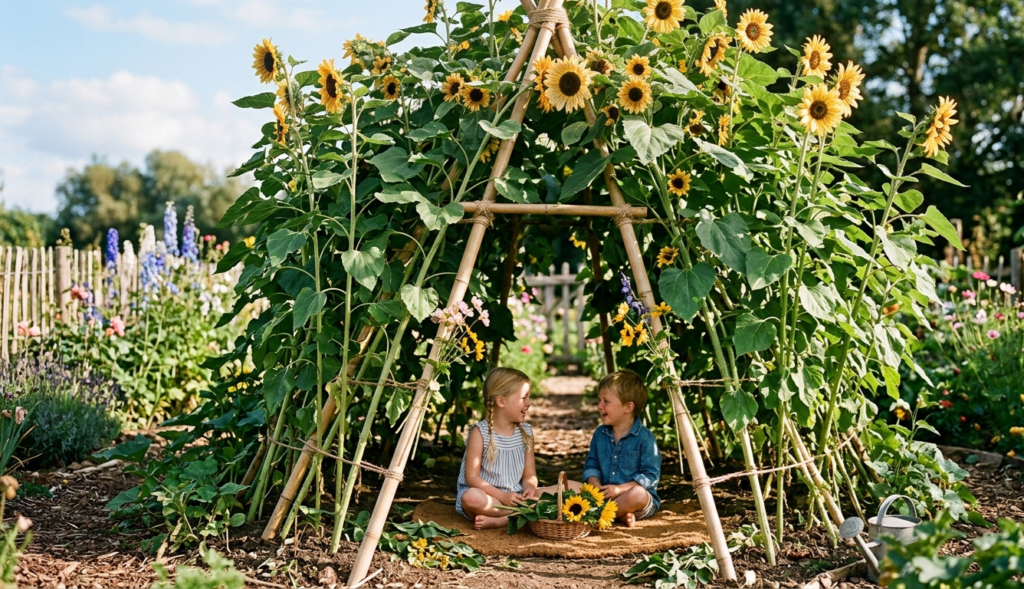
A sunflower teepee is a classic children’s gardening project that combines creativity, patience, and wonder. Construct a simple teepee frame using bamboo poles or long branches tied together at the top, then plant tall sunflower seeds around the base of each pole. As the sunflowers grow, train them to climb the poles by gently tying the stems with soft twine. Within a few months, the teepee becomes a living playhouse, complete with a canopy of green leaves and golden flowers. Children love having their own secret hideaway, and the process of watching the sunflowers grow from seeds to towering structures teaches patience and responsibility. This project works best with tall, sturdy varieties like Mammoth Grey Stripe or Kong.
Plant a Sunflower Cutting Garden for Fresh Bouquets
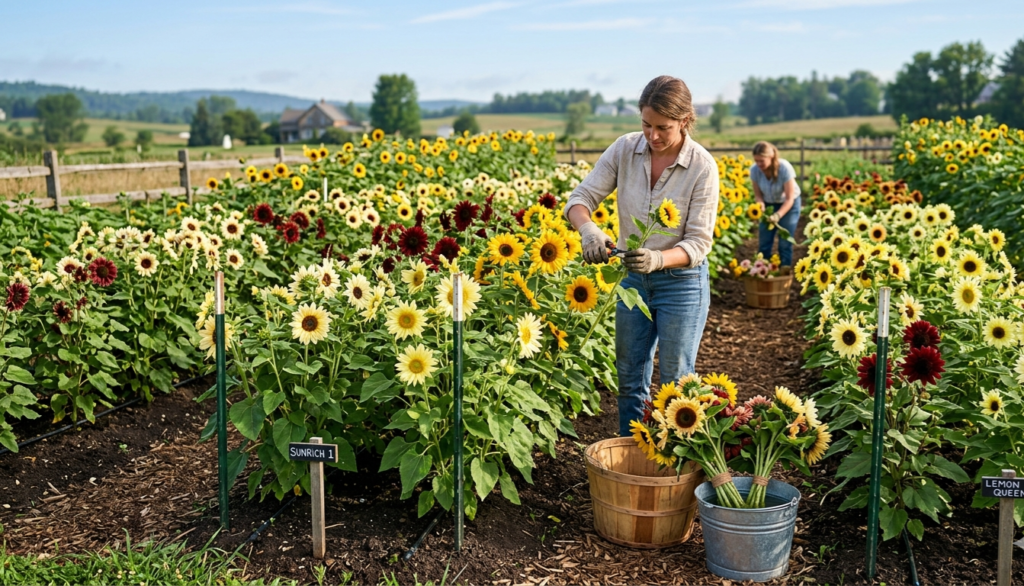
Sunflowers make spectacular cut flowers, and planting a dedicated cutting garden ensures you have a steady supply for indoor arrangements throughout the summer. Choose branching varieties such as Sunrich, ProCut, or Lemon Queen, which produce multiple blooms on each plant rather than a single giant head. Plant them in rows, spacing them about six to twelve inches apart, and harvest flowers when the petals are just beginning to unfurl. Cut stems early in the morning and place them immediately in water for the longest vase life. A sunflower cutting garden not only fills your home with fresh flowers but also provides abundant blooms to share with neighbors and friends. You can also experiment with different colors, including deep red, pale lemon, and creamy white varieties for added interest.
Combine Sunflowers with Climbing Vines for Double Beauty
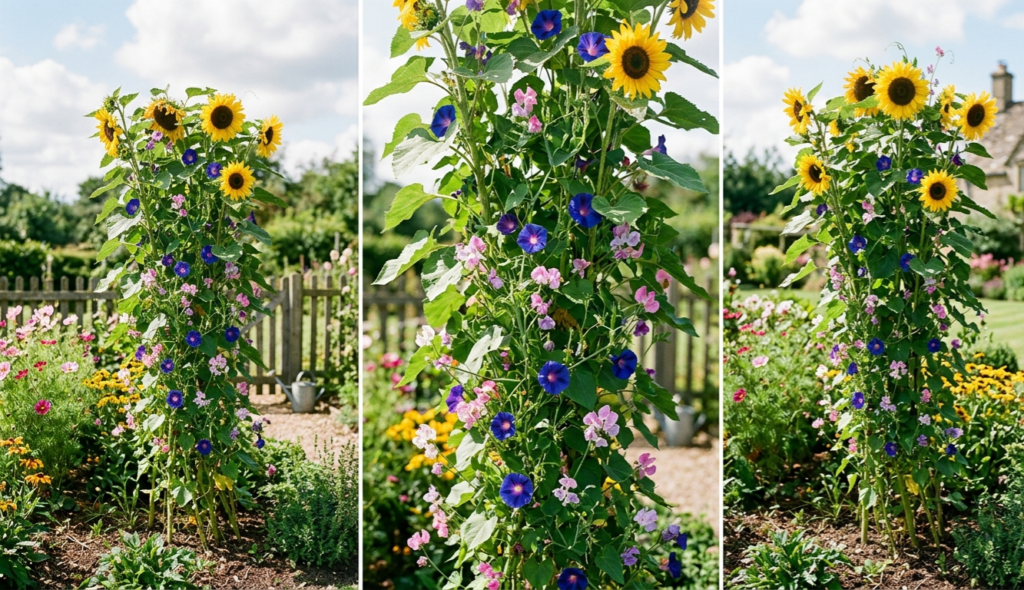
For a truly spectacular display, plant sunflowers alongside climbing vines such as morning glories, sweet peas, or scarlet runner beans. The sunflower stalks act as natural trellises, allowing the vines to twine upward and create a stunning combination of colors and textures. Imagine towering sunflowers adorned with deep blue morning glories or delicate sweet pea blossoms. This pairing is not only visually striking but also space-efficient, allowing you to grow two plants in the footprint of one. Plant the sunflower seeds first, and once they are established and several feet tall, sow the climbing vine seeds at the base. The vines will naturally find their way up the sturdy sunflower stalks, creating a living sculpture that evolves throughout the season.
Establish a Sunflower Pollinator Sanctuary
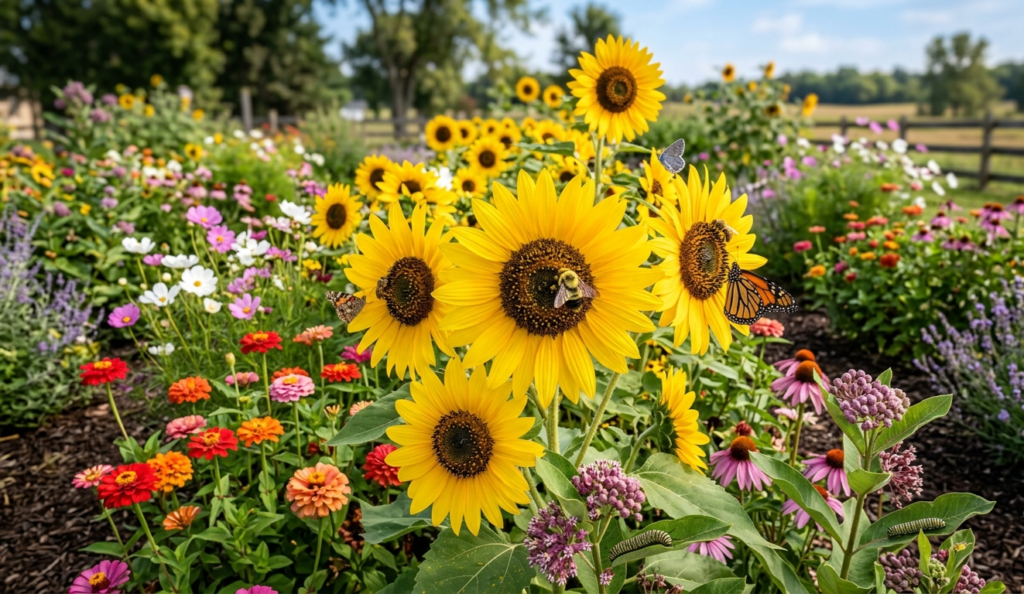
Sunflowers are among the best plants for supporting pollinators. Their large, open faces provide abundant nectar and pollen for bees, butterflies, and other beneficial insects. By planting a diverse array of sunflower varieties, you can create a pollinator sanctuary that serves as a vital food source throughout summer and early fall. Choose single-flowered varieties rather than double-flowered types, as single flowers offer easier access to pollen and nectar. Plant in drifts or large groupings to make it easy for pollinators to find the flowers. Surround your sunflowers with other pollinator-friendly plants such as zinnias, cosmos, and milkweed to create a continuous bloom cycle. A sunflower pollinator sanctuary not only benefits local ecosystems but also brings your garden to life with constant buzzing and fluttering activity.
Harvest Sunflower Seeds for Snacking and Bird Feed
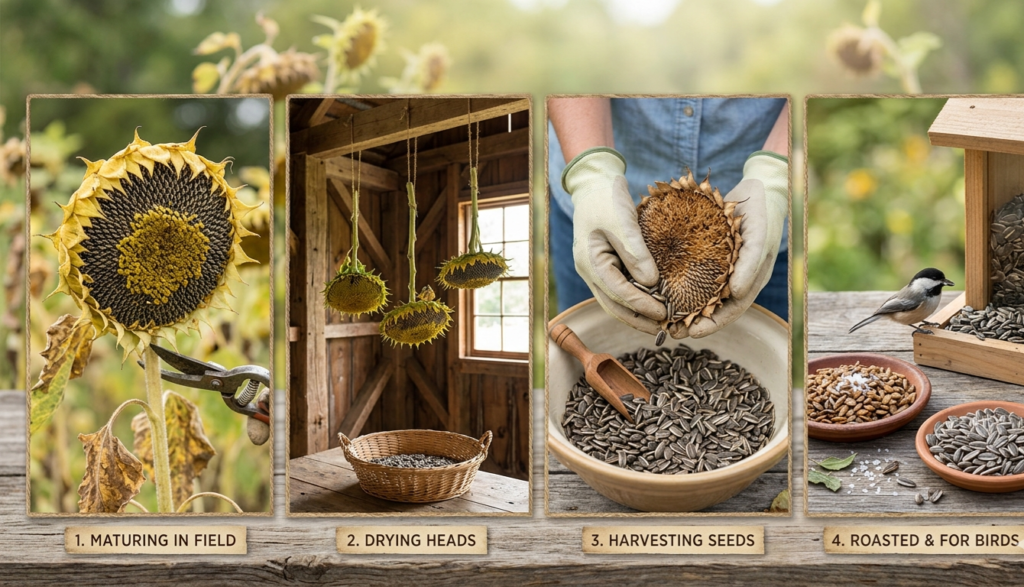
One of the most rewarding aspects of growing sunflowers is the harvest. After the flowers fade and the seed heads mature, you can collect the seeds for roasting as a healthy snack or for feeding birds throughout winter. To harvest, wait until the back of the flower head turns yellow or brown and the seeds begin to loosen. Cut the head with a foot of stem attached, hang it in a dry, well-ventilated area to finish drying, then rub the seeds free. Roast them with a little salt for a delicious treat, or store them raw to offer birds during colder months. Leaving some seed heads standing in the garden also provides natural bird feeders that attract chickadees, finches, and other songbirds, adding wildlife observation to your gardening experience.
Create a Sunflower Meadow or Wildflower Mix
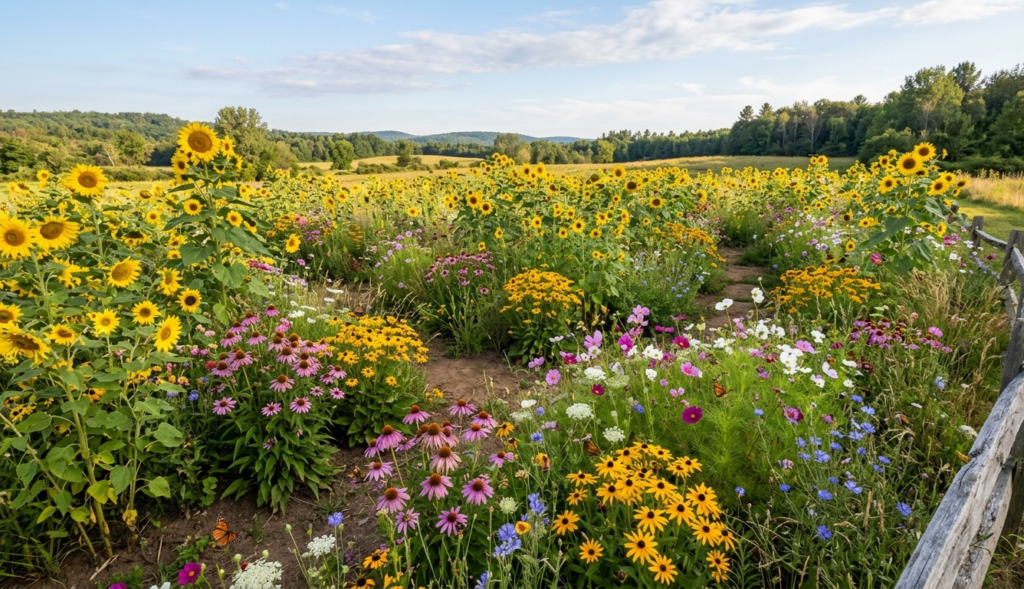
For a naturalistic, low-maintenance approach, consider planting a sunflower meadow. This involves sowing sunflower seeds alongside a mix of native wildflowers and grasses to create a sprawling, informal display that changes throughout the seasons. Choose a mix of sunflower varieties at different heights to add dimension, and combine them with flowers like black-eyed Susans, coneflowers, and cosmos. A sunflower meadow requires minimal upkeep beyond initial site preparation and occasional watering during establishment. It provides habitat for pollinators and birds, reduces lawn maintenance, and offers a breathtaking display of color and movement. This approach is ideal for larger properties, unused field corners, or anywhere you want to create a natural, meadow-like aesthetic.
Tips for Success with Any Sunflower Gardening Idea
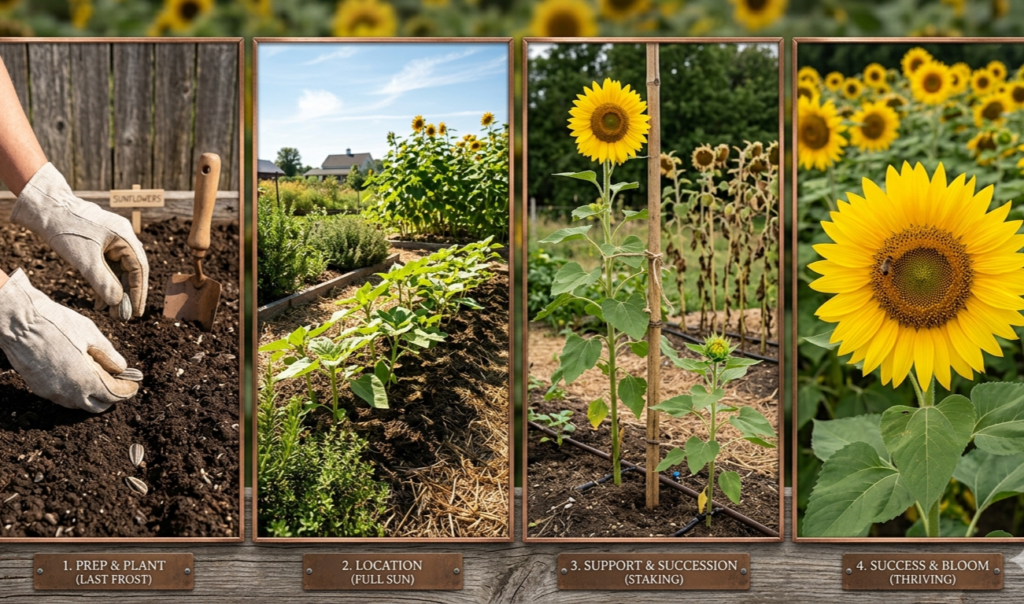
Regardless of which sunflower gardening idea you choose, a few basic principles will ensure success. Sunflowers thrive in full sun, requiring at least six to eight hours of direct light daily. They prefer well-draining soil enriched with compost or organic matter. While they are relatively drought-tolerant once established, consistent watering during germination and early growth is essential. Tall varieties may require staking or support, especially in windy areas. Plant seeds directly in the ground after the last spring frost, as sunflowers do not transplant well due to their long taproots. For continuous blooms throughout summer, plant successive batches every two to three weeks.
Conclusion
Sunflowers are more than just flowers—they are garden architecture, wildlife habitat, children’s playhouses, and sources of nourishment all wrapped into one. Their versatility makes them suitable for gardeners of every skill level and every type of outdoor space. Whether you create a towering living wall, a cozy teepee for little ones, or a simple row of cheerful blooms along a fence line, sunflowers bring undeniable joy to any garden. Their bold presence and sunny disposition remind us to look toward the light and embrace the beauty of the growing season. So choose an idea from this list, plant some seeds, and watch as your garden transforms into a place of wonder and delight.